
Introduction
Glass bottles come in many different forms, and choosing the right one is about more than appearance. Glass bottles can be classified by the type of glass used, their shape, color, intended application, and specific bottle style.
Round bottles are commonly used for medicine, cosmetics, and beverages. Tall, narrow bottles are often used for wine, oil, and sauces. Bottle color can also help protect products from light. Knowing the main types of glass bottles makes it easier to choose the right bottle for your product and brand.
Common Types of Glass Bottles and Their Uses
Glass Bottle Types by Material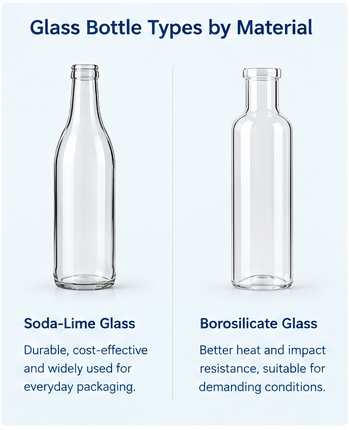
Most conventional glass containers are made from soda-lime glass bottles. It is widely used because it offers a practical balance of durability, chemical stability, manufacturing efficiency, and cost. Soda-lime glass is common in food, beverage, liquor, cosmetic, and many other types of packaging.
Borosilicate glass bottles can handle larger temperature changes and offer good heat and impact resistance. It is often used when a product or production process may involve heating, cooling, or other demanding conditions.
For most everyday glass bottle packaging, soda-lime glass is the standard choice. Borosilicate glass is more suitable when heat resistance, temperature changes, or impact resistance are important.
Glass Bottle Types by Shape
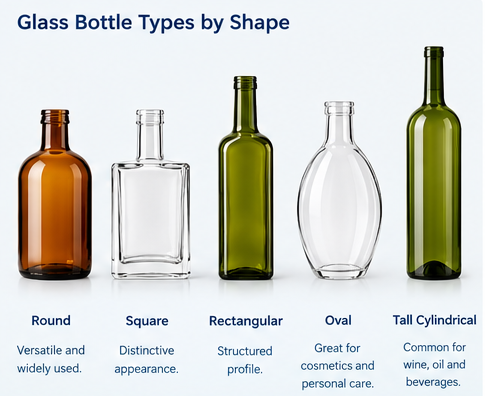
Glass bottles are available in many shapes, but several basic forms are especially common:
- Round bottles – versatile and widely used for beverages, liquor, medicine, cosmetics, and food products.
- Square bottles – provide a distinctive appearance and are often used for spirits, sauces, and specialty products.
- Rectangular bottles – offer a more structured profile and are common in liquor and decorative packaging.
- Oval bottles – often chosen for cosmetics, personal care, and specialty products.
- Tall cylindrical bottles – commonly used for wine, oil, vinegar, and some beverages.
Bottle shape can affect more than visual appearance. It may also influence handling, labeling, pouring, shelf presentation, and packing.
Glass Bottle Types by Color
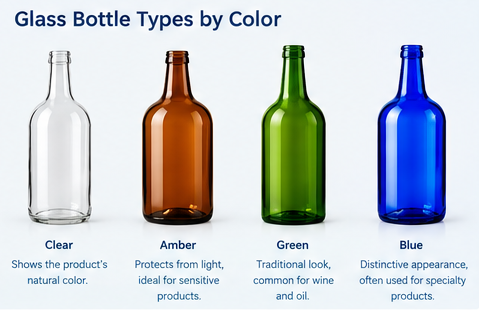
Glass color is both a design choice and a functional consideration.
Clear or flint glass bottles allow the product to remain highly visible, making it popular for beverages, food, cosmetics, and liquor. It is especially useful when the product’s natural color is part of its appeal.
Amber glass bottles provide greater protection from light than clear glass and are commonly used for pharmaceuticals, essential oils, beer, and other products that may be sensitive to light.
Green glass bottles have been used for wine bottles for a long time. It is also common for oil and other specialty products. Besides its practical use, its traditional look can give a product a familiar and recognizable style.
Blue glass bottles are often chosen when a brand wants its packaging to look different. It is commonly used for beverages, cosmetics, and other specialty products that need a more distinctive appearance.
Glass Bottle Types by Use
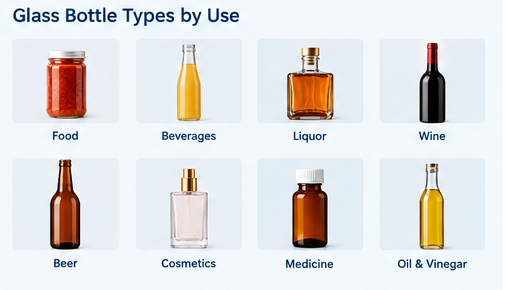
The best way to understand different glass bottle types is to consider what they are used to contain. The product often determines the bottle’s capacity, shape, opening, color, closure, and overall design.
Glass Bottles for Food
Glass bottles are commonly used for sauces, honey, jam, pickles, vinegar, and cooking oils. The bottle should match the product’s consistency and dispensing needs. For example, sauces may require a wider opening, while oil and vinegar often use a narrower neck.
Glass Bottles for Beverages
Glass bottles are widely used for water, juice, soft drinks, beer, and other beverages. Their design should suit the product, filling process, and closure. Carbonated drinks also require bottles that can handle internal pressure.
Common options include round, tall, slim, and custom-shaped bottles. Clear glass is popular because customers can see the product inside, while colored glass gives the bottle a different look and may help protect the contents from too much light.
Glass Bottles for Liquor
Liquor bottles are available in many shapes and sizes, including round, square, rectangular, and short, wide designs. In addition to capacity and closure compatibility, appearance is especially important for spirits packaging.
Bottle shape, glass color, label area, and overall proportions can all contribute to brand identity and shelf appeal.
Glass Bottles for Wine
Wine bottles come in several established styles, with the Bordeaux bottle being one of the most recognizable. It typically has straight sides and defined shoulders.
When choosing a wine bottle, brands usually look at its capacity, weight, shape, closure, color, label size, and shipping needs. Green glass is a traditional choice for many wines, while clear glass is often used when the color of the wine is part of the product’s appeal.
Glass Bottles for Beer
Beer bottles are commonly made from amber, green, or clear glass. Amber glass is widely used when greater protection from light is desired.
Beer bottles must also be suitable for carbonated products and the required filling process. Common designs include short round bottles, tall bottles, swing-top bottles, and bottles with crown closures.
Glass Bottles for Cosmetics
Glass bottles are widely used for skincare, perfume, essential oils, and other personal care products. Cosmetic packaging often combines appearance with practical dispensing features such as pumps, droppers, and sprays.
Round, square, oval, clear, and colored bottles are all common. The right choice depends on the product, bottle size, dispensing system, labeling area, and desired brand image.
Glass Bottles for Medicine
Pharmaceutical and healthcare products, including liquid medicines and syrups, are often packaged in glass bottles. These bottles need to be compatible with the formulation and closure system.
Amber glass is frequently used when light protection is important. Depending on the product, pharmaceutical bottles may also need to meet specific quality and regulatory requirements.
Glass Bottles for Oil, Vinegar, and Condiments
Oil, vinegar, and condiments often use tall or narrow glass bottles that support controlled pouring. Marasca bottles and Dorica bottles are two recognizable styles commonly associated with olive oil and vinegar.
Bottle selection may depend on product viscosity, opening size, capacity, closure, and shelf appearance. A suitable design can improve both ease of use and product presentation.
Quick Comparison
| Glass Bottle Type | Common Shapes or Colors | Typical Uses | Key Considerations |
|---|---|---|---|
| Soda-Lime Glass Bottles | Round, square, rectangular | Food, beverages, liquor, cosmetics | Cost-effective and widely used for everyday packaging |
| Borosilicate Glass Bottles | Various shapes, usually clear | Products requiring heat resistance | Suitable for greater temperature changes |
| Round Glass Bottles | Round, cylindrical | Beverages, liquor, medicine, cosmetics | Versatile and easy to label |
| Square Glass Bottles | Square, rectangular | Liquor, sauces, specialty products | Distinctive appearance and efficient shelf arrangement |
| Clear Glass Bottles | Transparent | Beverages, food, cosmetics, liquor | Shows the product’s natural color |
| Amber Glass Bottles | Amber or brown | Medicine, beer, essential oils | Provides greater protection from light than clear glass |
| Green Glass Bottles | Green | Wine, oil, specialty products | Traditional appearance and potential light protection |
| Blue Glass Bottles | Blue | Beverages, cosmetics, specialty products | Creates a distinctive packaging appearance |
| Food Glass Bottles | Various shapes | Sauces, honey, jam, pickles, vinegar | Opening size and dispensing needs matter |
| Beverage Glass Bottles | Round, tall, slim | Water, juice, soft drinks, beer | Must suit the beverage and filling requirements |
| Liquor Glass Bottles | Round, square, rectangular | Whisky, vodka, gin, other spirits | Shape, weight, closure, and branding are important |
| Wine Glass Bottles | Bordeaux and other wine bottle styles | Red wine, white wine, other wines | Capacity, color, closure, and shipping needs |
| Cosmetic Glass Bottles | Round, square, oval | Skincare, perfume, essential oils | Must match pumps, droppers, sprays, and product presentation |
| Medicine Glass Bottles | Various shapes, often clear or amber | Liquid medicine, syrups, healthcare products | Product compatibility and regulatory requirements |
| Oil and Vinegar Glass Bottles | Tall, narrow, Marasca, Dorica | Olive oil, vinegar, condiments | Pouring control, closure, and product viscosity |
Common Glass Bottle Styles and Names
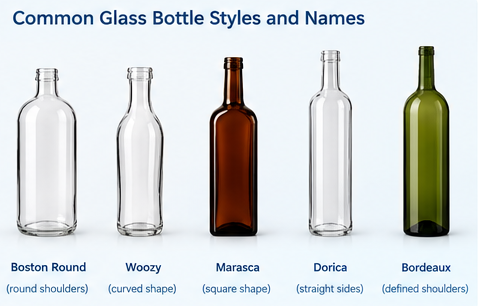
In addition to broad categories such as round or square bottles, the glass packaging industry uses specific names for recognizable bottle styles. These styles often have a characteristic body shape, shoulder design, or neck proportion.
Boston Round Bottles
Boston round bottles have a rounded cylindrical body with a relatively short shoulder and a narrower neck. They are a familiar packaging style for products such as medicines, cosmetics, essential oils, and personal care liquids. Their simple shape makes them versatile, while the compact profile works well for smaller capacities.
Woozy Bottles
Woozy bottles are tall, slender bottles with a relatively narrow neck. They are particularly associated with sauces, hot sauces, condiments, vinegar, and similar liquid food products. Their narrow profile and pouring-oriented design make them a recognizable choice for products that need controlled dispensing.
Marasca Bottles
Marasca bottles are commonly recognized by their square or rectangular body and distinctive proportions. They are strongly associated with olive oil, vinegar, and specialty cooking oils. Their structured shape also provides a clear labeling area and a distinctive appearance on the shelf.
Dorica Bottles
Dorica bottles are tall and slender, usually with a cylindrical or near-cylindrical body and a relatively long neck. They are commonly used for olive oil, vinegar, and gourmet food products. Compared with the broader, more structured appearance of a Marasca bottle, a Dorica bottle generally creates a taller and more elegant profile.
Bordeaux Bottles
Bordeaux bottles are one of the most recognizable wine bottle styles. They generally feature relatively straight sides, defined shoulders, and a long body with a relatively short neck. The style is traditionally associated with Bordeaux wines and is widely used for many other types of wine as well.
How to Choose the Right Type of Glass Bottle
Choosing a glass bottle should start with the product rather than the bottle itself. A bottle that looks attractive may still be unsuitable if its capacity, closure, or design does not work with the product and filling process.
1. Start with the Product
Consider what the bottle will contain and how the product will be used. Food, beverages, liquor, cosmetics, and medicine can all have different packaging requirements.
2. Choose a Suitable Shape
Think about how the bottle will look, be handled, labeled, stored, and used. Round, square, rectangular, and tall bottle designs each create a different balance between function and appearance.
3. Select the Right Capacity
Capacity should match the product volume and target market. Common bottle sizes range from small containers for cosmetics or medicines to larger formats for beverages, liquor, and food products.
4. Consider Glass Color
Clear glass is useful when product visibility is important. Colored glass may be preferable when appearance, branding, or light protection is a concern.
5. Match the Closure
The bottle neck finish needs to be compatible with the selected closure. Depending on the product, this may include a screw cap, cork, lug cap, pump, dropper, or spray closure.
6. Consider Production and Packaging
The final bottle should also work with the filling, sealing, labeling, packing, and transportation process. For commercial projects, these practical factors are just as important as the visual design.
FAQ
Why do some glass bottles have a punt on the bottom?
A punt is the indentation found on the bottom of some glass bottles, especially wine and sparkling wine bottles. It is part of the bottle’s overall base design and can contribute to stability and manufacturing characteristics. Its presence does not automatically mean that the bottle is stronger than one without a punt.
What is the difference between Bordeaux and Burgundy wine bottles?
Bordeaux and Burgundy are two classic wine bottle styles with noticeably different profiles. Bordeaux bottles generally have straight sides and more defined shoulders, while Burgundy bottles typically have a wider body with more gradually sloping shoulders.
Does the shape of a glass bottle affect its strength?
Yes, bottle shape can affect how stress is distributed through the glass. Curved surfaces generally distribute stress more evenly, while corners and sharp transitions require careful design. However, overall bottle strength also depends on glass thickness, weight distribution, manufacturing quality, and whether the bottle needs to handle internal pressure.
What is the difference between a narrow-neck and wide-mouth glass bottle?
A narrow-neck glass bottle has a smaller opening, while a wide-mouth bottle has a larger opening. Narrow-neck bottles are often useful for controlled pouring and dispensing, while wide-mouth bottles make filling, emptying, or accessing the contents easier. The right choice depends on the product, how it will be used, and the type of closure required.
Does a heavier glass bottle mean better quality?
Not necessarily. A heavier glass bottle may have a thicker or more robust design, but weight alone does not determine quality. A well-designed bottle should have the appropriate glass distribution, strength, and finish for its intended use. For many applications, using the right amount of glass is more important than simply making the bottle heavier.
Final Thoughts
For businesses sourcing glass bottles, the right choice depends on the product, filling process, closure, capacity, and packaging requirements. This article has introduced common glass bottle types by material, shape, color, use, and style, including bottles for food, beverages, liquor, wine, beer, cosmetics, medicine, oil, vinegar, and condiments.
Our factory produces glass bottles for different applications and can support a range of shapes, colors, capacities, and customization requirements. If you are looking for a suitable glass bottle for your product, contact us to discuss your requirements.
